What Are the Benefits of Drinking Tea? Tea Polyphenols and Health from a Modern Scientific Perspective
the benefits of drinking tea have long been supported by modern scientific research. Tea is rich in catechins, polyphenols, flavonoids, and various vitamins, making it one of the healthiest natural drinks. A regular tea habit offers the following core benefits:
- Antioxidants and metabolic support: Tea polyphenols have excellent antioxidant capacity, helping to neutralize free radicals and support metabolism.
- Regulating body functions and staying focused: The moderate caffeine in tea, combined with L-theanine, refreshes the mind while keeping your mood steady—without the jitters coffee can cause.
- help maintain digestive function: Drinking a moderate amount of more oxidized tea after meals helps break down fats and supports digestion.
The Benefits of Tea and Its History: From Medicine to a Global Drink
Beyond the benefits of drinking tea, we shouldn't overlook its rich culture. Tea is not just a drink—it carries Eastern philosophy and lifestyle aesthetics:
- Everyday tea culture: In Taiwan and East Asia, serving tea expresses courtesy, warmth, and respect. Whether at a family gathering or a business meeting, a pot of hot tea brings people closer together.
- Spiritual tea ceremony culture: Elevating tea to a spiritual level, the tea ceremony values harmony, respect, purity, and tranquility, seeking inner calm through mindful brewing and tasting.
- Modern bubble tea culture: Traditional tea culture has merged with modern drink-making to create the globally popular bubble tea and cold-brew tea culture, giving younger generations a more convenient way to enjoy tea.

The Benefits of Tea and Its History: From Medicine to a Global Drink
Tea has a long history, evolving over thousands of years into today's rich and diverse tea culture:
- Shennong tasting herbs (herbal origins): Legend has it that tea originated with Shennong in ancient China, first used as an herb for cooling the body.
- Tang and Song dynasties (boiled and whisked tea): In the Tang dynasty, Lu Yu wrote The Classic of Tea, laying the foundation of tea studies; in the Song dynasty, whisked tea and tea competitions flourished, and tea became one of the four elegant arts of the literati.
- Ming and Qing dynasties (rise of loose-leaf brewing): The first Ming emperor abolished compressed tea cakes in favor of loose-leaf tea, ushering in the modern way of brewing loose tea in teapots or gaiwans, while oxidized teas such as oolong, black tea, and scented tea emerged.
- Modern spread from East to West: Tea traveled to Europe and the rest of the world via the Maritime Silk Road and trade routes, giving rise to diverse traditions such as English afternoon tea, Lipton black tea, and Taiwan's premium high-mountain tea.

To learn more about the history and culture of Eastern tea, see the public historical records of the Encyclopedia of Taiwan (Ministry of Culture).
Comparing Types of Tea: Oxidation, Flavor, and Nutrients Explained
To get the most out of drinking tea, the key is choosing the right tea for your body. Here's a comparison of different types of tea:
| Tea Type | Oxidation Level | Representative Teas | Flavor Profile | Key Compounds & Benefits |
| Green tea | Unoxidized (0%) | Biluochun, Longjing, jasmine green tea | Fresh, with notes of fresh leaves or flowers | Highest catechin content, strong antioxidant power |
| Yellow / white tea | Slightly oxidized (10–20%) | Silver Needle, Shou Mei | Downy aroma, bright yellow liquor | Very gentle, rich in flavonoids |
| Blue-green tea / oolong | Semi-oxidized (20–70%) | Four Seasons Spring, Dongding Oolong, high-mountain tea | Both floral and roasted notes, mellow with a sweet finish | Combines green tea's freshness with black tea's sweetness; aids digestion |
| Black tea | Fully oxidized (100%) | Assam, Ruby Black (Taiwan Tea No. 18) | Rich and full-bodied, with malty or fruity notes | Rich in theaflavins and thearubigins; gentler on the stomach |
| Dark tea | Post-fermented | Ripe Pu'er | Rich aged aroma, pronounced earthiness, smooth mouthfeel | Great after meals; helps support fat metabolism |
For detailed agricultural characteristics and processing techniques of Taiwan's tea varieties, see the authoritative public information from the Tea and Beverage Research Station, Ministry of Agriculture.
Benefits of Tea and How to Drink It Right: Water Temperature, Timing, and Precautions
Knowing how to drink tea correctly lets you fully absorb its nutrients without harming your health:
- Precise water temperature
- Green tea: Brew at 80°C–85°C to avoid destroying vitamin C and releasing too many bitter tannins.
- Oolong and black tea: Brew at 90°C–95°C to fully awaken their lofty aromas and roasted character.
- Pu'er and aged tea: Brew with boiling water at 100°C to release their aged aroma.
- Avoid drinking on an empty stomach or to excess
- Drinking tea on an empty stomach can stimulate stomach acid and cause so-called "tea drunkenness" (dizziness, shaky hands, stomach discomfort). The best time to drink is 30 minutes to 1 hour after a meal.
- Pay attention to food safety and quality certification
- When buying tea, choose brands with clear origin labeling and food safety test certification.
For food hygiene regulations and residue standards, check the Taiwan Food and Drug Administration, Ministry of Health and Welfare to drink with confidence.
How to Choose Your First Quality Tea
Once you understand the characteristics of tea, choose by these three criteria:
- Choose by your constitution: If you have a sensitive stomach, choose more oxidized oolong or black tea; if you're looking for antioxidants and metabolic support, choose green tea.
- Check the leaves' appearance and aroma: Quality dry leaves are tightly rolled with a vivid color, and the brewed tea is clear and bright, with no musty smell or artificial flavoring.
- Taste it unsweetened: Great tea, even with no sugar at all, has a natural sweet finish and is smooth on the throat.
Benefits of Tea for Men: Supporting Metabolism and Staying Energized
For many men, the main the benefits of drinking tea of a daily tea habit show up as better metabolism and higher productivity. Men often face heavy workloads, frequent eating out, and high-calorie diets that put a strain on the body. The catechins and polyphenols in tea help maintain digestive function and support metabolism, while moderate caffeine combined with L-theanine provides a steady lift during long hours or intense thinking—without the palpitations and anxiety coffee can cause. It's the ideal natural drink for modern men balancing career and health.
- Key Benefits for Men
- Metabolic support: Catechins and polyphenols help maintain digestive function and ease the burden of greasy, high-calorie meals.
- Efficient energy: Moderate caffeine plus L-theanine provides steady focus without palpitations or anxiety.
Benefits of Tea for Women: Beauty from Within and a Healthy Glow
For women, the benefits of drinking tea lean more toward beauty and metabolic balance from the inside out. Tea's excellent natural antioxidants help neutralize free radicals, helping women maintain radiant skin and youthful energy. In addition, many women experience slower metabolism and a heavy feeling from sitting for long periods; drinking a moderate amount of more oxidized oolong or black tea after meals helps break down fats, lightens the load, and supports healthy digestion—making it easy to maintain a healthy glow and a light, comfortable figure.
- Key Benefits for Women
- Beauty from within: Natural antioxidants effectively neutralize free radicals, keeping skin youthful from the inside out.
- Staying in shape: More oxidized teas (oolong, black tea) help break down fats after meals and support digestion, easing the effects of sitting all day.
Benefits of Tea for Men vs. Women
| Comparison | Benefits for Men | Benefits for Women |
| Core benefits | Supports metabolism, boosts productivity | Beauty from within, healthy glow |
| Common lifestyle issues | Heavy workloads, frequent eating out, and high-calorie diets | Sitting for long periods, little exercise, slower metabolism and digestion |
| Key active compounds | Catechins, tea polyphenols, caffeine + L-theanine | Natural antioxidants (tea polyphenols), polyphenols from more oxidized teas |
| How it works | Maintains digestive function and supports metabolism Provides a steady lift without palpitations or anxiety | Neutralizes free radicals for radiant skin; helps break down fats after meals and supports digestion |
| Recommended teas | Pure freshly brewed tea for work or intense focus | More oxidized oolong or black tea after meals |
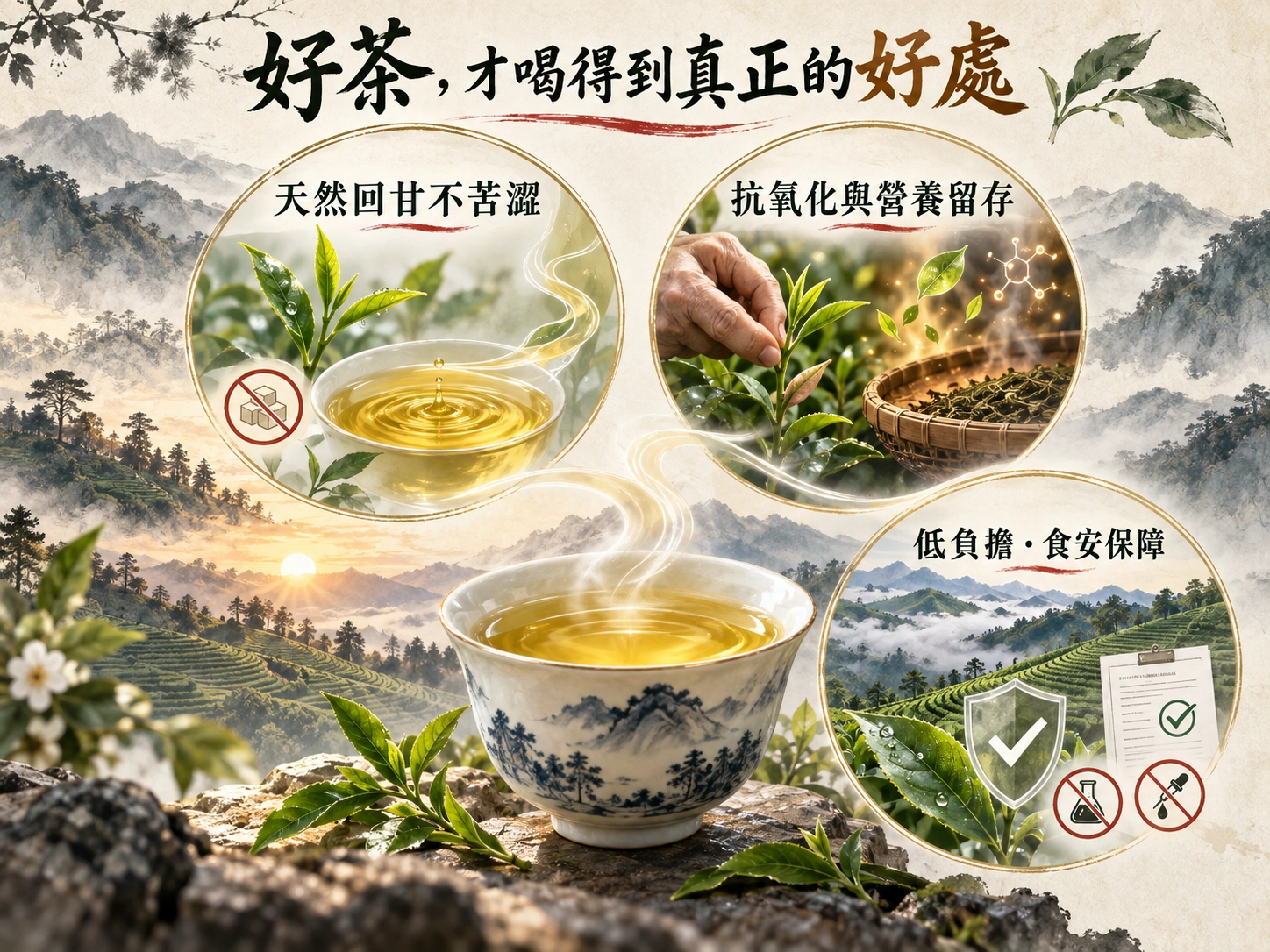
What Are the Advantages of Drinking Good Tea? A Natural Sweet Finish and a Guilt-Free, Healthy Experience
When we talk about the benefits of drinking tea, it all starts with choosing good tea leaves. Quality tea offers three irreplaceable advantages:
- A natural sweet finish without bitterness: Rich in natural L-theanine and body, quality tea leaves a natural, mouth-watering sweetness in the throat even without any added sugar.
- Excellent antioxidant and nutrient retention: Careful roasting and picking techniques preserve as much of the polyphenols, vitamins, and other active nutrients as possible.
- Very low burden and strong food safety: Tea from quality regions that passes strict pesticide residue testing, with no artificial flavorings or sweeteners, satisfies your craving for a drink without burdening your body.
How to Tell Good Tea from Poor Tea: A Smart Consumer's Three-Step Guide
With so many teas on the market, how can consumers tell a good cup from a bad one? Follow these three steps:
- Look at the dry leaves and the brewed tea: Good dry tea is tightly rolled with a natural color; the brewed tea should be clear and bright, without excessive particles or cloudiness.
- Smell the aroma and taste the flavor: Good tea has natural floral, fruity, or roasted aromas that last; if it smells overly sweet or chemical, it may contain artificial flavoring.
- Try it unsweetened: Let the tea cool slightly before drinking. Good tea stays smooth and sweet even when cool, while poor-quality tea turns very bitter and numbs the tongue as it cools.
How Consumers Can Choose the Right Daily Healthy Tea
From a consumer's perspective, the most important step in enjoying the benefits of drinking tea is choosing the tea that best suits your body and lifestyle. If you like a fresh taste and want antioxidants, choose unoxidized green tea; if you have a sensitive stomach or prefer a rich tea aroma, more oxidized oolong or fully oxidized black tea is a gentler choice. Choose quality tea brands with clear origin labeling and food safety test certification—one good cup a day makes it easy to build wellness into daily life.
Want to discover more of tea's secrets or experience its rich, lingering culture?ROOJI draws on a deep tea heritage and inherited craftsmanship to take you from the tea garden all the way to the essence in your cup. Whether you're looking for the right everyday healthy tea or want to explore professional tea knowledge and business partnerships, feel free to contact us anytime—let ROOJI be your best partner in exploring tea and sharing great flavor!
Looking for a premium bubble tea with a truly sweet finish and no bitterness, or a stable, high-quality Taiwanese tea supply chain that passes strict food safety testing? Whether you want to experience the refined flavor of natural tea or plan a customized tea partnership, feel free to contact us, and let us create a premium tea experience and new business opportunities just for you!