What Are the Benefits of Oolong Tea? The Secret of a Semi-Oxidized Tea That Combines the Freshness of Green Tea with the Richness of Black Tea
The benefits of oolong tea come from its special "semi-oxidized" processing. Among the six major tea categories, oolong belongs to the "blue-green tea" group, with an oxidation level between unoxidized green tea and fully oxidized black tea (about 15%–70%). This unique process preserves the natural polyphenols of green tea while offering the mellow, gentle richness of black tea.
Drinking a moderate amount of oolong daily helps provide hydration and plant nutrients, making it a natural drink for supporting metabolism, easing everyday stress, and keeping breath fresh after meals. Understanding oolong's components and characteristics helps us incorporate it more effectively into a healthy daily lifestyle.
To learn more about Taiwan's specialty tea regions and processing standards, see the Tea and Beverage Research Station, Ministry of Agriculture.
Oolong Tea Benefits: An In-Depth Look at Six Core Nutritional Values
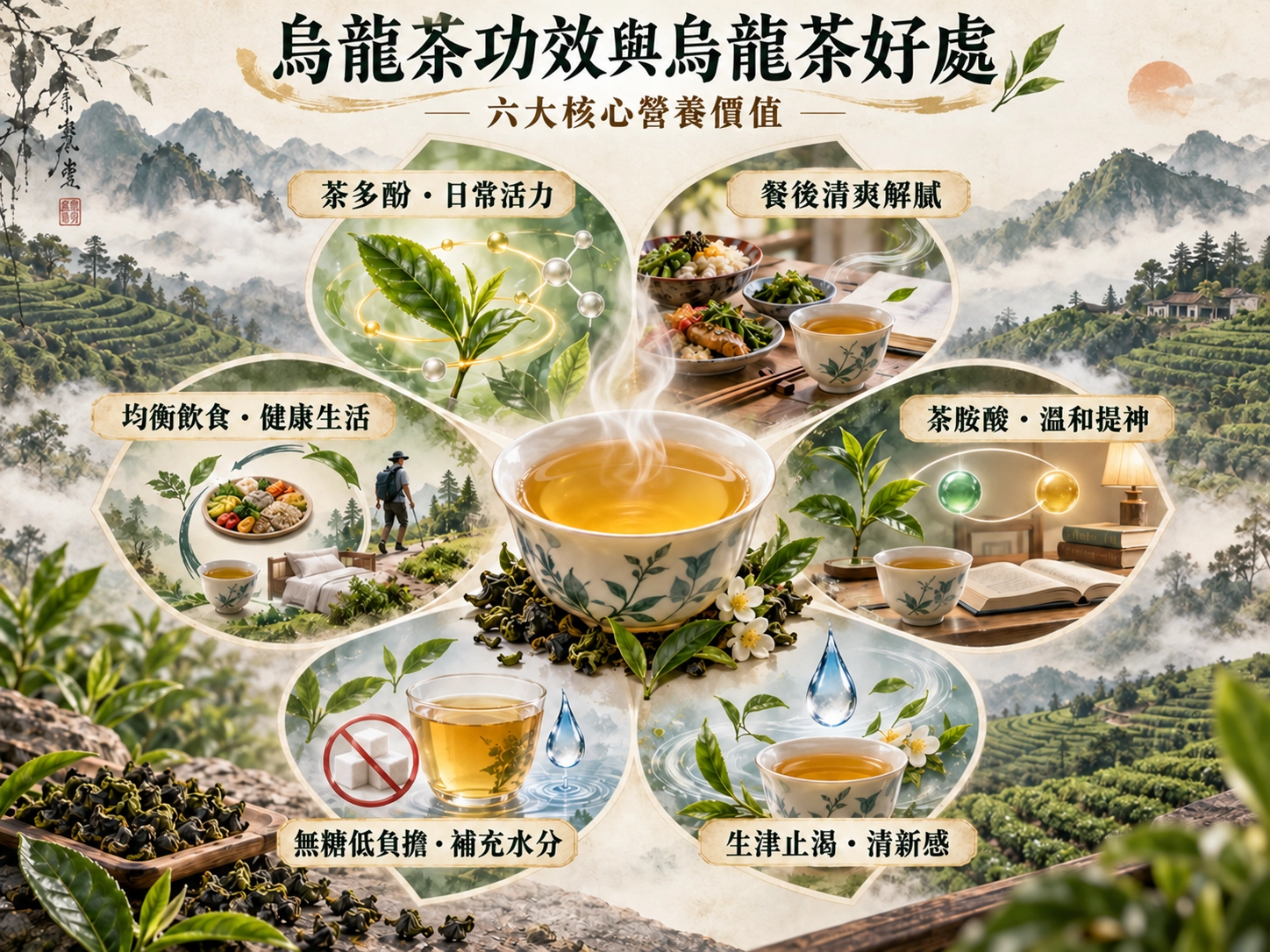
Oolong tea's benefits attract a lot of attention thanks to the natural compounds in the leaves. When it comes to oolong's advantages, most people first think of how it refreshes the palate after meals and its flavor experience. Its natural value includes the following:
- Contains tea polyphenols and catechins that support metabolismOolong tea contains a variety of polyphenols. Drinking it in moderation as part of your daily diet can help support metabolism and maintain energy and well-being.
- Refreshes after meals and helps maintain digestive functionThe flavor compounds and polyphenols formed during oxidation give oolong a refreshing feel after eating. Drinking unsweetened oolong after meals helps cut through richness and supports digestive function—a great companion to healthy eating habits.
- L-theanine and moderate caffeine for a gentle liftOolong contains L-theanine and a moderate amount of caffeine. L-theanine has a sweet taste and brings a relaxing, comfortable drinking experience; together with caffeine, it provides a gentle, lasting lift that helps you stay focused at work and study.
- Quenches thirst and promotes fresh breathTraditional tea culture values tea's ability to quench thirst and refresh the mouth. The natural compounds and aromatics in oolong stimulate saliva, keep the mouth moist, and help keep breath fresh and the body feeling cool.
- Zero calories, a great source of hydrationUnsweetened pure oolong has no calories, making it an excellent alternative for people who don't enjoy plain water—helping you stay hydrated without adding calories.
- Supports a balanced diet and overall daily healthDrinking quality oolong regularly and in moderation, combined with a balanced diet and regular exercise, supports the body from the inside out and lays the foundation for a good quality of life for busy modern people.
For food safety and nutrition labeling regulations related to oolong tea, visit the Taiwan Food and Drug Administration, Ministry of Health and Welfare to view the relevant regulations.
Oolong Tea Benefits and Types: Four Common Oolongs by Oxidation and Roast Level
Oolong's benefits and flavor vary with the leaves' oxidation level and roasting. The oolongs common in Taiwan and international markets fall into four main categories:
- High-Mountain Oolong (lightly oxidized, fresh and floral)Grown in high-mountain tea regions above 1,000 meters, where large day-night temperature swings and frequent mist keep bitter compounds low, producing a clear, sweet tea rich in natural flavor compounds.
- Dongding Oolong (medium oxidation, rich aroma)A classic representative of Taiwanese tea, made with medium oxidation, cloth-ball rolling, and repeated roasting for both floral notes and a mellow roasted aroma.
- Oriental Beauty (heavily oxidized, honey aroma)Harvested after the leaves are bitten by tea green leafhoppers, it is highly oxidized and naturally carries honey and ripe-fruit aromas without any additives.
- Tieguanyin (heavily roasted, deep character)Through special roasting and repeated rolling, it brews a dark amber liquor with its distinctive "Guanyin rhyme" and slightly tangy ripe-fruit notes.
| Oolong Type | Oxidation Level | Roast Level | Aroma & Flavor |
| High-Mountain Oolong | Light (15%–25%) | Unroasted / light roast | Pronounced floral notes, fresh and sweet |
| Dongding Oolong | Medium (25%–35%) | Medium / heavy roast | Roasted ripe-fruit aroma, rich and mellow |
| Oriental Beauty | Heavy (60%–70%) | Unroasted | Natural honey aroma, sweet and fruity |
| Tieguanyin | Medium (30%–50%) | Heavy roast (repeated roasting) | Mildly tangy fruit notes, deep Guanyin character |
Oolong Benefits by Type: Find the Tea That Suits You Best
Oolong's benefits show great diversity across different crafting methods. Knowing the advantages of each type helps you choose the right tea for your taste and occasion:
- High-Mountain Oolong: Exceptionally Fragrant, Supports Metabolism
- Best for: Office workers and those who prefer a cool, refreshing, palate-cleansing taste.
- Key advantages: Retains rich natural tea aroma with a sweet, fresh finish, offering a timely lift and supporting metabolism.
- Dongding Oolong: Smooth and Mellow, Refreshes After Meals
- Best for: People who often eat out, love traditional tea aromas, and want fresh breath after meals.
- Key advantages: Moderately roasted for a mellow character that clears the heavy feeling after meals and helps support digestive function.
- Oriental Beauty: Sweet Honey Aroma, Relaxes Body and Mind
- Best for: Those who dislike bitterness and seek an elegant tea experience.
- Key advantages: A round, sweet liquor that is wonderfully soothing for easing stress and calming the mind.
- Tieguanyin: Deep Roast, Warming, and Long-Lasting
- Best for: Those who love bold, rich flavors and prefer a gentle tea character.
- Key advantages: High-temperature roasting gives a deep flavor that holds up to many infusions; it feels warm and comfortable after drinking—ideal as an everyday warm tea.
Oolong Tea Precautions: Four Principles for Healthy Tea Drinking
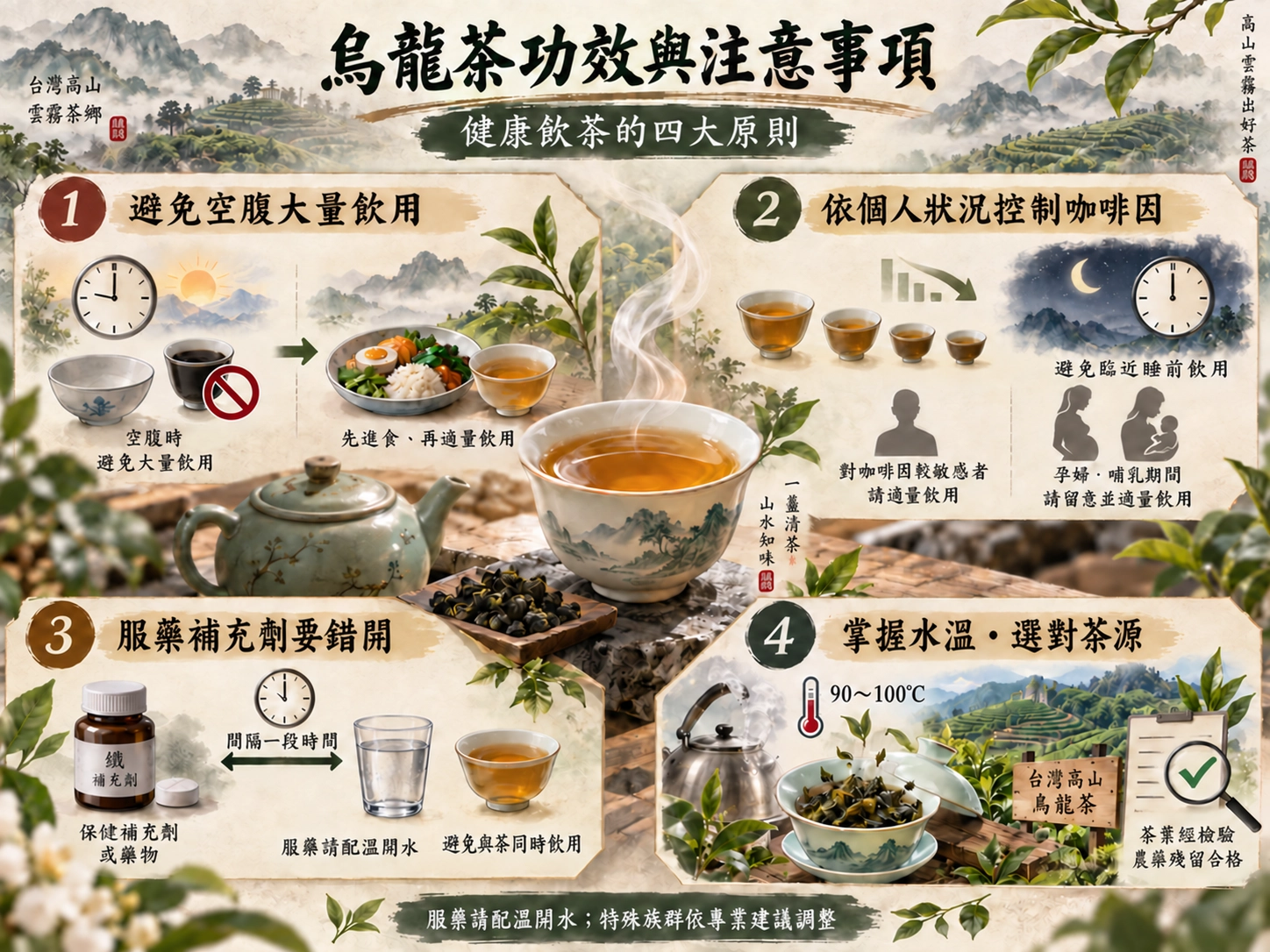
Although oolong has many benefits, you should still drink it correctly and keep a few precautions in mind to enjoy it safely and healthily:
- Avoid drinking on an empty stomachThe tannins and caffeine in oolong can irritate the digestive tract. Drinking large amounts on an empty stomach may cause discomfort (commonly called "tea drunkenness"). The best time to drink it is 30–60 minutes after a meal.
- Watch your total daily caffeine intakeOolong contains caffeine. Adults should keep daily caffeine intake under 300 mg (about 3–5 standard cups of oolong). Sensitive individuals and pregnant or breastfeeding women should drink in moderation and avoid drinking within 3 hours of bedtime to protect sleep quality.
- Avoid taking it together with supplements or certain medicationsTea polyphenols easily bind with iron in food. If you take iron supplements, leave 1–2 hours between them and your tea. Also, take medication with warm water—never with tea.
- Mind the brewing temperature and the tea's sourceBrew oolong with water at 90°C–100°C to fully release the aroma and flavor of whole-leaf tea. Also, choose quality tea that is clearly labeled and has passed SGS pesticide residue testing to ensure safety.
For daily nutrition and dietary guidance, see the dietary reference intakes provided by the Health Promotion Administration, Ministry of Health and Welfare.
Oolong Tea Benefits and Quality Sources: Great Tea Starts with Contract Gardens and High-Mountain Environments
Oolong tea's benefits depend closely on where the tea grows and the quality of the leaves. Oolong is a semi-oxidized tea (blue-green tea), and the growing environment is crucial to fully realizing its natural wellness value. Quality oolong mostly comes from high-mountain regions above 1,000 meters, where large day-night temperature swings and year-round mist slow the tea plants' growth, significantly reducing bitter compounds such as tannins while accumulating richer natural polyphenols, amino acids, and aromatic compounds.
Pristine soil and a high-mountain climate lay the purest foundation for tea. Only quality fresh leaves picked from quality gardens and processed with standardized tea-making craftsmanship can fully extract rich active nutrients—making oolong an ideal natural drink for supporting metabolism and refreshing the palate after meals.
To learn more about Taiwan's specialty tea regions and processing standards, see the Tea and Beverage Research Station, Ministry of Agriculture.
Oolong Benefits by Cultivar and Craft: How Oxidation and Roasting Shape Flavor and Quality
Oolong tea's benefits are also closely linked to the tea cultivar and its subsequent oxidation and roasting. Common Taiwanese oolong cultivars—such as Qingxin Oolong, Four Seasons Spring, Jin Xuan (Taiwan Tea No. 12), and Cuiyu—each have distinctive flavors even at the same oxidation level:
| Oolong Cultivar | Oxidation / Roasting | Flavor & Characteristics | Best Occasions |
| Qingxin Oolong | Light oxidation / medium roast | Elegant floral notes, sweet finish, rich high-mountain character | Daily pick-me-up; for those seeking refined tea aromas |
| Jin Xuan Oolong | Light oxidation / light roast | Natural milky aroma and fresh floral notes, smooth mouthfeel | First-time tea drinkers; those who prefer a gentle taste |
| Four Seasons Spring Oolong | Light oxidation / light roast | Bold, wild aroma with pronounced wildflower notes | Refreshing after meals, cuts through richness |
| Heavily Roasted Tieguanyin | Medium oxidation / heavy roast | Mildly tangy ripe-fruit notes, deep Guanyin character, mellow | Those who prefer warm tea or are more sensitive |
Choosing the right cultivar and oxidation level lets you enjoy the aroma while getting the wellness value that suits you best.
Oolong Benefits and Taste: From Refreshing Quench to a Lingering Sweet Finish
Oolong tea's benefits are reflected not only in how it supports the body, but also in a superb drinking experience that helps relieve everyday stress. A cup of top-quality oolong offers remarkably rich layers:
- Color and aroma: The liquor is a clear amber or yellow-green, and the steam carries natural floral, fruity, or roasted aromas.
- Refreshing on the palate: The tea is smooth and gentle going down, and natural tannins stimulate saliva for a thirst-quenching, cooling effect.
- An exceptional sweet finish: Quality oolong has a subtly sweet aftertaste even without sugar, quickly clearing the greasy feeling after meals and helping keep breath fresh and digestion comfortable.
This unique flavor experience is the core appeal that lets oolong perfectly replace sugary drinks and keep modern people hydrated without guilt.
Oolong Benefits and the ROOJI Advantage: Selected Contract Gardens and Heritage Roasting at Their Finest
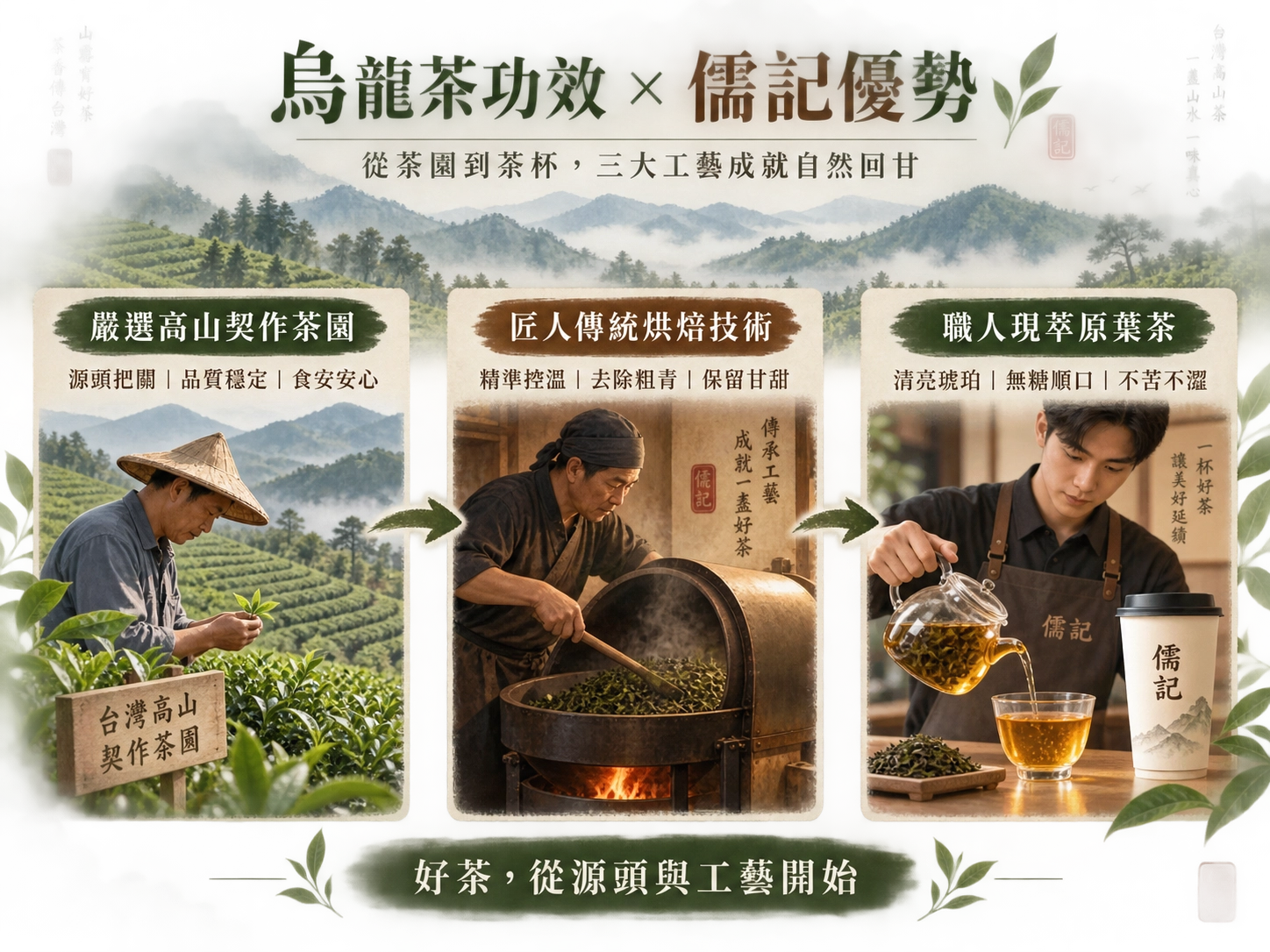
Oolong tea's benefits reach their full potential through attention to craft. The professional bubble tea brand ROOJI deeply understands consumers' pursuit of a great cup of tea. In product development, ROOJI holds to high standards:
- Selected high-mountain contract gardens: ROOJI works directly with quality high-mountain tea gardens, controlling quality at the source to ensure every batch meets strict food safety standards.
- Artisan traditional roasting: Combining traditional temperature-controlled roasting with precise heat control, we remove raw grassy notes while preserving the leaves' natural sweetness and long-lasting sweet finish.
- Artisan freshly brewed whole-leaf tea: ROOJI's signature is artisan freshly brewed whole-leaf tea. The liquor is a clear amber, and even unsweetened it is never bitter or astringent—smooth and naturally sweet—so customers can easily enjoy a pure, guilt-free tea experience.
By bringing traditional tea standards into modern stores, ROOJI lets every customer enjoy top-quality freshly brewed oolong anytime.
For food safety and labeling regulations, visit the Taiwan Food and Drug Administration, Ministry of Health and Welfare to view the relevant regulations.
Oolong Benefits and Consumer Trust: SGS-Tested Safety and a Strong Market Reputation
Oolong tea's benefits are inseparable from quality and safety. When choosing bubble tea or tea leaves, today's consumers value consistent quality and food safety above all.
ROOJI is committed to transparency and high quality. All of our tea sources pass SGS pesticide residue testing, and we fully disclose tea origins and nutritional information to safeguard consumers' food safety. With consistent tea quality and a strong market reputation, ROOJI has earned exceptional consumer trust in a competitive tea market and become a top choice for unsweetened pure tea and healthy drinking.
For daily nutrition and dietary guidance, see the Health Promotion Administration, Ministry of Health and Welfare.
Slow Down and Enjoy a Truly Great Cup of Tea at ROOJI
No matter how busy life gets, don't forget to treat your body well. ROOJI is more than a tea shop—we bring together the care of traditional tea craft and the needs of modern healthy living. Next time you pass by, order an unsweetened whole-leaf oolong and feel the natural sweetness spread from the tip of your tongue to your throat. This time, you'll discover that drinking great tea can be this simple and this reassuring.
Looking for a premium bubble tea with a truly sweet finish and no bitterness, or a stable, high-quality Taiwanese tea supply chain that passes strict food safety testing? Whether you want to experience the refined flavor of natural tea or plan a customized tea partnership, feel free to contact us, and let us create a premium tea experience and new business opportunities just for you!